The Unspoken Code: What AV Crew Members Who Always Get Called Back Actually Do Differently
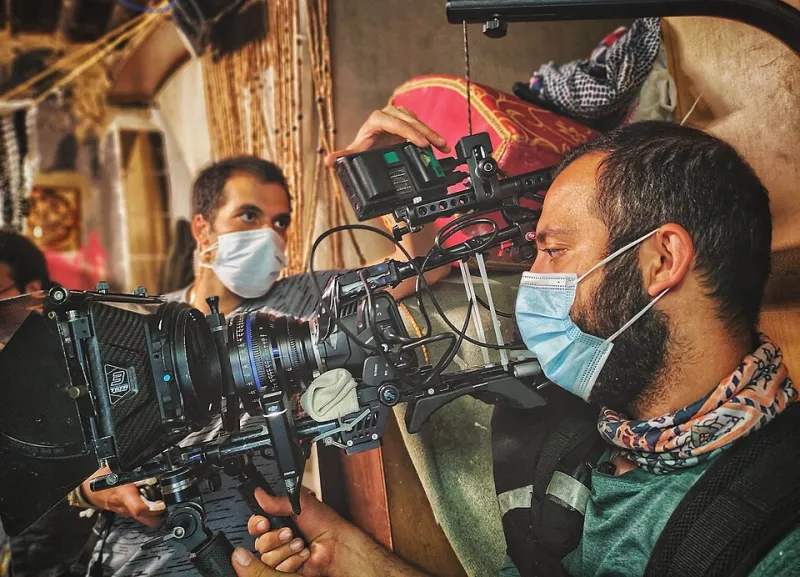
Photo: DarkRavenCore, CC BY-SA 4.0, via Wikimedia Commons
Nobody in AV sits down and writes out the rules. There's no handbook for how to carry yourself on a load-in, how to talk to a venue's house staff, or what to do when something breaks and the client is 30 feet away. But those unwritten rules exist — and the people who figure them out early build careers. The ones who don't tend to wonder why the phone stops ringing.
This isn't about technical skill. It's assumed that you know your gear. This is about everything that happens around the gear — the behavior, the communication, the judgment calls, the small stuff that doesn't show up on a resume but absolutely shows up on your reputation.
How You Show Up Before the Job Starts
Call time is not a suggestion. This feels obvious, but it's worth saying plainly because the AV world runs on schedule interdependencies. When you're late, you're not just late — you're pushing the timeline for every other department on the floor. The lighting crew waiting on your signal chain. The stage manager who needs to know the PA is live before they'll let anyone onstage. The client who's watching everything with growing anxiety.
Showing up on time — actually a few minutes early — signals that you understand how production works. It says you've thought about the day beyond your own task list. That's noticed.
And when you arrive, come ready. Know what the day looks like. Have your tools. Have your kit. Don't be the person asking to borrow a Sharpie at 7am.
Treat the Venue Like It Belongs to Someone Else — Because It Does
One of the fastest ways to build a bad reputation across a market is to be careless with venue property. Scuffed walls from a cart you were moving too fast. A load-bearing door propped open with a road case. Gear left in a hallway that isn't yours to block.
Venue staff talk. They talk to each other, they talk to event coordinators, and those coordinators talk to clients. If you're known as the crew that leaves a mess or damages things, that reputation will follow you — especially in smaller markets where everyone knows everyone.
The flip side is also true. AV pros who treat venues with genuine respect — who clean up after themselves, communicate clearly with house staff, and leave a space better than they found it — get remembered. Venue coordinators recommend them. That's free marketing you can't buy.
Gear That Isn't Yours Deserves the Same Care as Gear That Is
This comes up constantly in rental and production environments. You're working with a company's house rig, a client's existing system, or gear pulled from a vendor you didn't choose. How you handle that equipment reflects directly on your professionalism.
Coil cables correctly. Return cases closed and latched. Don't use someone else's mic stand as a footrest. Don't assume you can reconfigure a house system without asking. These aren't nitpicky rules — they're the baseline behavior that separates crew who get rehired from crew who get a polite "we'll reach out" that never turns into a call.
If something breaks or gets damaged on your watch, even if it wasn't your fault, say so immediately. Don't hide it, don't minimize it, and definitely don't let someone else find it later. The way you handle a mistake often matters more than the mistake itself.
Read the Room on Communication
Different jobs have different communication cultures, and the best AV crew members adapt quickly. Some productions run on radios with formal check-ins and clear chains of command. Others are looser, with a lot of real-time problem-solving happening in conversation. Some clients want updates constantly. Others hired you precisely because they don't want to think about AV.
Figuring out which environment you're in — fast — is a skill. Watch how the production manager communicates. Listen to how questions get asked and answered. Match the energy of the room without losing your own professionalism.
And regardless of the environment: never complain in front of the client. Not about the schedule, not about the venue, not about other crew, and definitely not about the pay. Save those conversations for people who can actually do something about them, in a setting where they're appropriate.
When Things Go Wrong, Your Reaction Is the Job
Something is going to go sideways. That's not pessimism — it's just the reality of live production and complex installs. A cable fails. A unit doesn't come up. The signal chain that worked perfectly in rehearsal is doing something weird now that there are 400 people in the room.
How you handle that moment is what people remember. The crew members who build lasting reputations are the ones who stay calm, communicate clearly, and focus on solutions rather than blame. Not panicked. Not finger-pointing. Not making the client feel like the situation is worse than it is.
This is also where the prep work pays off. The pros who have backup plans, spare cables, a mental list of what to check first — they're the ones who turn a potential disaster into a footnote. And when clients see that kind of composure under pressure, they don't just book you again. They tell other people.
The Small Stuff Is Actually the Big Stuff
Ask any production manager or technical director who they want on their next call, and they'll describe someone who's technically capable, sure — but mostly they'll describe someone who's easy to work with. Who communicates. Who doesn't create drama. Who helps without being asked and knows when to stay in their lane.
That means offering to help another department when you've got a free moment. It means not monopolizing the catering table. It means saying thank you to the venue staff who let you in at 6am. It means being the person who picks up a piece of trash on the floor of a venue even when it's not your trash.
None of this is glamorous. None of it shows up on a spec sheet. But in an industry that runs almost entirely on relationships and word of mouth, it is — without question — the difference between a full calendar and an empty one.
The technical skills are the price of admission. Everything else is the career.